Dalai Lama and Harrison Ford Film Inspires Prison Inmates to Resolve Conflicts
Khashyar | January 19, 2010
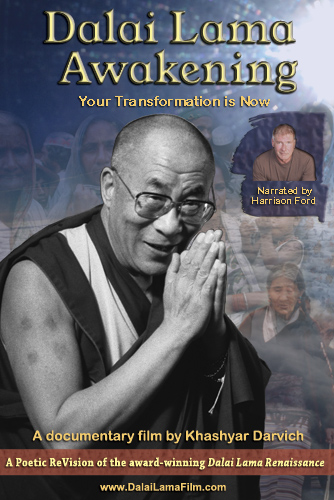
The Dalai Lama Renaissance film, narrated by Harrison Ford (www.DalaiLamaFilm.com), and a Q&A with Director Khashyar Darvich, offer insights on inner peace to men behind bars, half of whom are incarcerated for murder.

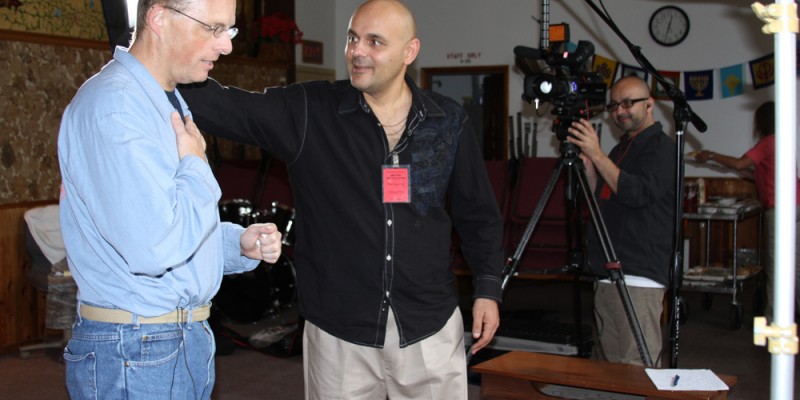
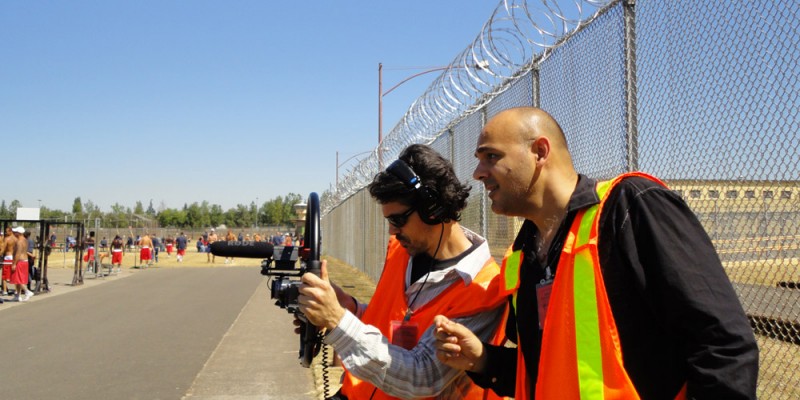
'Dalai Lama Renaissance' Documentary Film Producer-Director Khashyar Darvich speaks with inmates after a screening of the film at the Stiles Maximum Security Prison near Houston, Texas. Over half of the inmates in the audience are serving time for murder.
HOUSTON, TX – In a rare opportunity to contemplate the nature of their own existence and explore the essence of inner peace, dozens of inmates at two Texas prisons gained insights during screenings of the award-winning documentary film Dalai Lama Renaissance, narrated by Harrison Ford (www.DalaiLamaFilm.com). The film screened at the prisons as part of an ethics program organized by “Project Clear Light,” a nonprofit Buddhist volunteer organization that works with the Texas Department of Criminal Justice, and is scheduled to screen at other prisons across the United States in the coming months.
“There is such joy in being able to show films like Dalai Lama Renaissance to inmates,” said Terry Conrad, a certified volunteer Chaplain’s assistant, and Director of Project Clear Light. “It is so rewarding to sit in meditation and have a conversation with them about what is really important, and to understand who we are and what we are capable of.”
Conrad asked the film’s Producer-Director, Khashyar Darvich, to show Dalai Lama Renaissance to inmates whom Conrad regularly meets with and teaches. With approval from prison administrators, two screenings were scheduled: one in the Stiles prison in Beaumont, Texas, and one in Ramsey prison, south of Houston. Darvich then volunteered to fly to Texas to speak with inmates after each screening. About half of the inmates in the prison audiences were convicted of murder.
“The intention of making this film was to impact audiences in a positive way,” said Director-Producer Khashyar Darvich of Wakan Films. “I had never been to a prison before, but I had a deep sense that inmates may have something to say about the film’s theme of overcoming the ego and opening one’s heart.”
Both Darvich’s and Conrad’s purpose in screening the film for inmates was to provide them with a message that urges them to focus on improving themselves from the inside out.
“I heard the Dalai Lama talking about the importance of compassion for compassion’s sake, because it’s the right thing to do,” said David, an inmate at the Ramsey Unit. “Because that’s what makes you happy inside, it’s what helps you develop inner peace…. When he started talking about it, I just started getting tingly all over…. It really touched me.”
“What I thought was so profound about the film was the child-like simplicity of the Dalai Lama and the profoundness of his understanding of how human nature and humanity works,” said Deon, another inmate at Ramsey.
The award-winning film, which is narrated by Harrison Ford, and has screened in hundreds of cinemas around the world in several languages, follows a group of Westerners who travel to India with the task of solving world problems under the spiritual guidance of the Dalai Lama. The film contrasts the Westerners’ intellectual approach to problem-solving against the enlightened approach of the Dalai Lama, and illustrates how the participants experience a profound personal transformation.

Inmates at the Ramsey maximum security prison in Texas watch the film, 'Dalai Lama Renaissance' (narrated by Harrison Ford).
Besides opportunities for introspection, the film also offered inmates some chances to laugh at the imperfection of humanity.
“It was funny to see these super-smart people and realize that they were too smart for the task,” said Jason, a prisoner at Ramsey, about the scientists and other world thought-leaders in the film.
Inmate Kelly added, “I saw something in the Dalai Lama that I now see in my own personal life, which is joy and compassion and peace.”
At both prisons, the inmates were attentive to the film and looked for ways to apply its lessons to their personal lives.
“I took a few notes, but I feel like I missed about 20,000 more than I was able to put down,” said John, an inmate at Stiles prison.
Fellow Stiles inmate Antoine added, “I could watch something like this every day, especially in the environment I’m in. You know, it’s like a snake pit. But if you’ve got inner peace, you will affect every person around.”
Darvich plans to offer the film for screenings at other prisons around the country, and would like to attend and speak with other inmate groups in person.
“The fundamental intention of making this film was to impact and transform audiences in a positive way,” Darvich said, “and I can think of no better place to screen the film than a prison.”
Details about Dalai Lama Renaissance and prison screenings are available at www.DalaiLamaFilm.com.

Dalai Lama Renaissance Film Screens in Prisons - Director Speaks with Inmates after Screenings
Khashyar | November 13, 2009

Inmates at the Ramsey maximum security prison in Texas watch the film, 'Dalai Lama Renaissance' (narrated by Harrison Ford). Half of the inmates in the audience were convicted of murder.
HOUSTON, Texas - When documentary film Producer-Director Khashyar Darvich was invited to screen his award-winning film about the Dalai Lama, ‘Dalai Lama Renaissance’ (narrated by Harrison Ford - www.DalaiLamaFilm.com), for inmates in maximum security prisons near Houston, Texas, he immediately said ‘yes.’
He offered to purchase his own an airline ticket, attend the screenings, and then speak with the inmates afterwards.
“I had never been to a prison before,” said Director Darvich. “But, I had a deep feeling that the experience would be meaningful and powerful, for the inmates, but also for me.”
“When I sense that my heart responds to something, and I feel warmth in my chest, then I take this as a clear sign that it is the right thing for me to pursue that course of action. The fundamental intention of making this film was to impact and transform audiences in a positive way,” Darvich says, “and I thought of no better place to screen ‘Dalai Lama Renaissance’ than a prison.”
Half of the inmates who attended the screenings in the two Texas prisons, were convicted of murder, some of them for double murder. There were some in the audience who were convicted of fraud.
However, Darvich was very surprised at how insightful and intelligent the inmates comments were about the film, and how the inmates applied the themes and insights in the film to themselves in a very personal and direct way.

'Dalai Lama Renaissance' Producer-Director Khashyar Darvich speaks with inmates from the Stiles maximum security prison near Houston, Texas after the screening of his film about the Dalai Lama to inmates.
“One of the main themes of the film,” says Darvich, “is resolving both inner and outer conflicts, and understanding that the best way to resolve conflicts in the world and in your community is to first resolve issues within yourself. I was very surprised at how the inmates understood this right away, and applied the message of the film immediately and effortlessly to themselves.”
One of the inmates in the Stiles maximum security prison in Texas, was emotional and expressed, as he pointed his fingers to his chest, that the issue of Tibet and China mentioned in the film and the realization that we all have our own “Inner Tibets,” really impacted him.
“One of the realizations that was crystal clear to me while I was at the prisons,” Darvich says, “was that some of the inmates would never be able to get out, and were to spend every day of their lives in prison. For most people, this would be a depressing and unfathomable thought. Before I visited the prisons, just imagining the thought of being incarcerated created fear and panic within me.”
Many of the inmates who attended the screenings have life sentences, and had a lot of time to think and reflect.
And yet, Darvich says, a person who is not physically in prison, can appear to have all of the freedom in the world, and yet be imprisoned by their thoughts, habits and the jail that they create within their own mind.
“Inmates who lose their freedom through their mistakes and actions,” Darvich says, “can choose to see their time in prison as an opportunity, and a place for spiritual learning and person growth.”
Darvich was speaking with the person who invited him to screen the film in the prisons, Terry Conrad, the Director of ‘Project Clear Light’ (www.projectclearlight.org), about how the life of an inmate is somewhat like a monk who lives in a monastery.
Except in the case of inmates, their world is often surrounded by violence, which is an added incentive to work on finding inner peace.
After the screenings and Q&A sessions, Darvich said that many of the inmates mentioned that they do not experience many positive life-affirming experiences in prison, and they felt inspired and impacted by the screening, and listening to the Dalai Lama’s words about compassion and personal responsibility.
“But,” Darvich says, “it felt good to my heart and one of the most meaningful things I have done with the film to show inmates that someone cares and wants to show compassion…”
Darvich says that he would like to screen the film in other prisons, and have further open dialogues with inmates.
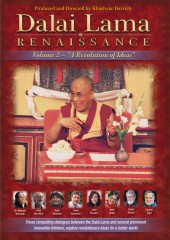
Khashyar Darvich is the Producer-Director of both the ‘Dalai Lama Renaissance’ documentary film (narrated by Harrison Ford), as well as the newly released ‘Dalai Lama Renaissance Vol. 2: A Revolution of Ideas,’ both of which are available on DVD here: www.DalaiLamaFilm.com

Dalai Lama Visit and Screening of ‘Dalai Lama Renaissance’ Film in Taiwan Angers Chinese
Khashyar | August 31, 2009
The Chinese government wasted no time in denouncing the visit by the Dalai Lama to Taiwan this week. Their strong words and denunciation of the Nobel Prize winner and exiled leader comes on the heels of another very public and intense reaction from Chinese officials after a documentary film about the Dalai Lama entitled “Dalai Lama Renaissance,” narrated by Harrison Ford (www.DalaiLamaFilm.com), was released in theaters in Taiwan this summer, and received front page press in the Chinese language Taiwanese newspapers. The response, in both cases, indicates that China is taking a very hard stance on the issue of the Dalai Lama and Tibet and in fact may even be intensifying its response.
According to a published report on CNN, “Beijing opposes the visit in whatever form and capacity,” a spokesman for the State Council Taiwan Affairs Office said, according to Xinhua, which did not name the spokesman. “Under the pretext of religion, (the Dalai Lama) has all along been engaged in separatist activities,” he said.
China’s stance on both Taiwan and Tibet are subjects of international controversy as the Chinese government considers both countries to be a part of China despite what residents of those countries feel. And it feels the Dalai Lama is a symbol and instigator of international opinion against China as relates to Tibet. So it did not hesitate in what it sees as interference by the Dalai Lama in another of its concerns. Apparently, even a film about the Dalai Lama is not welcome in Taiwan, at least to the Chinese government.
After an overwhelmingly positive response from audiences at screenings in Taiwan, The People’s Daily, a daily newspaper and media arm of the Central Committee of the Communist Party of China sharply criticized “Dalai Lama Renaissance” in an article in its online edition.
In the article posted July 14th in the People’s Daily Online entitled “Western Movies Build Grand and Perfect Image of Dalai Lama,” The People’s Daily writes: “In recent years, a wave of ‘Dalai Lama fever’ has appeared in the Western movie industry… describing the Chinese government’s peaceful liberation of Tibet as ‘cruel oppression,’ and depicting the Dalai Lama’s life in India as difficult.”
Referring to “Dalai Lama Renaissance,” the article states “The part of the movie related to the peaceful liberation of Tibet was filled with political bias, reflecting the director’s ignorance and misunderstanding of Tibet’s history… The movie transforms the Dalai Lama into an omniscient sage, reflecting a “misunderstanding” of the Dalai Lama’s image in the West…In fact, what these movies depict is just the ‘anesthesia’ given by the Dalai Lama to the West…”
Although the title of the article refers to “movies,” the article exclusively focuses on “Dalai Lama Renaissance” and tries to discredit the Producer-Director of the film, Khashyar Darvich. The writer claims that the director is a devotee of the Dalai Lama. “Director Khashyar Darvich has long boasted that he is a follower of the Dalai Lama,” he writes . He supports this assertion by referring to an interview where Darvich mentioned that he shot the film to be able to spend time with the Dalai Lama.
“It’s interesting that the Chinese Communist Party refers to me as a follower of the Dalai Lama,” Darvich responded. “Although I respect the Dalai Lama as a man of peace, just as the Nobel Peace Prize Committee did by awarding him the Nobel Peace prize, and as do most governments around the world, I am not a Dalai Lama groupie. When I began the film, I was not very familiar with the Dalai Lama. I think that his actions, and the respect that he garners around the world, speaks for itself.”
The fact that the Chinese Communist Party’s main media organization has chosen to criticize the film may be a reaction to the very positive press the “Dalai Lama Renaissance” received in the Chinese language press in Taiwan, where it premiered in front of sold-out audiences in Taipei on June 1. And it may be an attempt to counteract any effect on readers in mainland China, who often have access to Chinese language news from Taiwan, particularly since the reviews and articles in major Chinese language newspapers in Taiwan have been very positive.
Taiwan’s best-selling weekly newspaper, E Weekly, gave the film a rating of 82, which is the highest rating a film has received in the past year from its Taiwanese theatrical distributor, Blockbuster of Taiwan (no relation to Blockbuster video stores in the U.S). According to Bockbuster of Taiwan, E Weekly regularly gives films far lower ratings. FTV, a television station in Taiwan, also reported that that the premiere of the film in Taiwan was very successful, with not an empty seat in the cinema. Taipei Time wrote of the documentary, “the film rapidly grabs hold of you… an insightful documentary…”
So the reaction by the Chinese government to the planned visit by the Dalai Lama to Taiwan seems to be an extension of this anti-Dali Lama bias. Of course, Taiwan and spokespeople for the Dalai Lama make it clear that his visit to Taiwan is only to show support for victims of the recent Typhoon Morakot which hit Taiwan on August 8th and unleashed floods and mudslides. More than 400 people were killed.
This latest response has not stopped Producer-Director Darvich from working to get a screening of the film in mainland China itself. It will be interesting to see how the Chinese respond to that if they do not even want the Dali Lama himself, or his words and image on a film, seen in the nation of Taiwan.
There will also be a special screening of “Dalai Lama Renaissance” during the Dalai Lama’s visit to Long Beach, CA on September 25.
For more information on the film, go to www.DalaiLamaFilm.com.

Dalai Lama Renaissance Film chosen for special screening during the Dalai Lama’s Sept 25-26 visit to the Los Angeles area/ Long Beach
Khashyar | August 23, 2009
‘Dalai Lama Renaissance,’ the award-winning documentary film narrated by Harrison Ford, has been chosen for a special screening during the Dalai Lama’s Sept 25-26 visit to the Los Angeles area, by one of the coordinators of the Dalai Lama’s visit.
The Tibetan Association of Southern California will screen ‘Dalai Lama Renaissance’ on the first night of the Dalai Lama’s public talk and teachings in Long Beach, CA on Friday September 25, at the Scottish Rite Cathedral in Long Beach.
Producer-Director Khashyar Darvich, as well as Tibetan special guests, will appear after the screening for a Q&A with the audience.
The screening of the documentary film, which Darvich has offered as a fundraiser for the Tibetan Association of Southern California, follows criticism of the film by the Chinese Communist Party, after ‘Dalai Lama Renaissance’ received front page press in Taiwan after it opened theatrically in that Chinese-speaking country.
In July, the People’s Daily, a daily newspaper and media arm of the Central Committee of the Communist Party of China, quickly and sharply criticized ‘Dalai Lama Renaissance’ in an article in its online edition.
Darvich has offered to travel to Mainland China and screen ‘Dalai Lama Renaissance,’ with the intention of listening to the views of the Chinese People and Government, and to foster a constructive dialogue.
For more information about the Long Beach, CA screening of ‘Dalai Lama Renaissance,” please visit www.DalaiLamaFilm.com

Recent reviews and press for the Dalai Lama Renaissance Documentary Film
Khashyar | August 2, 2009
Recent press review quotes for “Dalai Lama Renaissance”:
“Dalai Lama Renaissance is an interesting portrayal of human ego pitted against compassion and altruism, exemplifying the very essence of the issues facing the world today.” - Todd Mayville, Elephant Journal
“Fire up this DVD and prepare to be amazed… The film has a certain persuasive power… Hilarious.” - Ross Robertson, EnlightenNext Magazine
“A powerful cinematic documentary… A very moving documentary… unexpected and powerful… Long after it ends, the totality of the documentary lingers, as one contemplates the fact that, if every human being decides to act in the best interest of human kind, we can change the world.” -Stan Robinson, Screen Scene/Arizona Weekly
“The film rapidly grabs hold of you… There is plenty of humor… [a] top-notch comedy… A journey of self-discovery… The lessons of Dalai Lama Renaissance apply just as much to the audience watching this insightful documentary” - Ian Bartholomew, Taipei Times
“Saw a great documentary on dvd the other night, ‘Dalai Lama Renaissance.’ If you haven’t seen it, you should.’ - SeriousChedder.com
“A memorable gathering of elites… an inspiring documentary which depicts the Dalai Lama philosophy of peace… Full of meaning… Powerful.” Li Zhao Yang, Pots Newspaper - Taiwan
“A big spiritual harvest for everyone…” - Qiu Zu, China Times, Taiwan
“No empty seat at the premiere of the documentary ‘Dalai Lama Renaissance… The Taipei premiere has attracted a full house and many people were touched after watching the film.” - FTV Television, Taiwan
“Dalai Lama Renaissance is full of historical significance… [Harrison] Ford’s strong, deep voice adds much color to the documentary” - Zou Nian Zu , Liberty Times Newspaper, Taiwan
“HARRISON FORD SKIS WITH THE DALAI LAMA: Harrison Ford, Jackson Hole’s favorite ski son, is riding the chairlift with the Dalai Lama as Harrison is narrating the new film ‘Dalai Lama Renaissance.’ The film premiered in Taiwan and got rave reviews from the Taiwanese Press. China was immediately critical of the film and of the West’s depiction of what has been going on in Tibet. The producer/director Khashyar Darvich has offered to do a screening of the film in China with a question and answer session afterwards. No word on when China offered Khashyar to ski off of steep cliff or to go shush himself in response.” - The Ski Channel Television Network

Harrison Ford Documentary, Dalai Lama Renaissance, Attacked by China’s Communist Party
Khashyar | July 28, 2009

China's Communist Party has attacked the "Dalai Lama Renaissance" Documentary Film
Chinese government reacts to successful theatrical premiere of Dalai Lama film and positive press in Taiwan
Los Angeles, CA (July 29, 2009) - The Chinese government often has the clout and muscle to prevent Hollywood films from being released in Asia, and can even discourage films from having an extended release in the West if they are perceived to threaten Chinese policy.
Films starring such big name stars as Richard Gere and Sharon Stone were boycotted by China after the actors expressed support for the Tibet Independence Movement. After Disney released Kundun, Martin Scorsese’s 1997 feature film about the Dalai Lama, the studio incurred the wrath of the Chinese government, and Disney films were banned for an indefinite period of time.
Recently, after a theatrical documentary film about the Dalai Lama and narrated by Harrison Ford entitled Dalai Lama Renaissance (www.DalaiLamaFilm.com) was released in theaters in Taiwan this summer and received front page positive press in the Chinese language Taiwanese newspapers, the Chinese government took keen notice.
The People’s Daily, a daily newspaper and media arm of the Central Committee of the Communist Party of China, quickly and sharply criticized Dalai Lama Renaissance in an article in its online edition.
The article, posted July 14th in the People’s Daily Online entitled “Western Movies Build Grand and Perfect Image of Dalai Lama,” argues that “in recent years, a wave of ‘Dalai Lama fever’ has appeared in the Western movie industry… describing the Chinese government’s peaceful liberation of Tibet as ‘cruel oppression,’ and depicting the Dalai Lama’s life in India as difficult… Some movies even advocate the Dalai Lama’s concept of [Tibetan] ‘independence.’”
Although the title of the article refers to “Movies,” the article exclusively focuses on Dalai Lama Renaissance. Referring to the film, which has been distributed in cinemas around the world, the article criticizes that “the part of the movie related to the peaceful liberation of Tibet was filled with political bias, reflecting the director’s ignorance and misunderstanding of Tibet’s history… The movie transforms the Dalai Lama into an omniscient sage, reflecting a ‘misunderstanding’ of the Dalai Lama’s image in the West… In fact, what these movies depict is just the ‘anesthesia’ given by the Dalai Lama to the West.”
The fact that the Chinese Communist Party’s main media organization has chosen to criticize the film may be a defensive reaction to the very positive press that Dalai Lama Renaissance received in the Chinese language media in Taiwan, where it premiered in front of sold-out audiences on June 1. And it may be an attempt to counteract any effect on readers in mainland China, who often have access to Chinese language news from Taiwan.
Taiwan’s best-selling weekly newspaper, E Weekly, gave the film a rating of 82, which is one of the highest ratings that a film has received in the past year in Taiwan. According to its Taiwanese theatrical distributor, Blockbuster of Taiwan (no relation to Blockbuster video in the United States), E Weekly regularly gives films far lower ratings. FTV, a television station in Taiwan, also reported that that the premiere of the film in Taiwan was very successful, with not an empty seat in the cinema, and that “many people were touched after watching the film.” The Taipei Times wrote that “the film rapidly grabs hold of you… an insightful documentary.”
Ironically, the Chinese Communist Party may feel most threatened by the idea brought up in the film regarding economic sanctions against China from the West. But despite this being a near unanimous suggestion by the Westerners in a scene in Dalai Lama Renaissance, the Dalai Lama discouraged the proposal.
The Taiwanese newspaper The Liberty Times points out that, in the film, “the Dalai Lama thinks that humanity is the most important thing in the world and economic sanctions might affect many Chinese citizens, thus he is hesitant whether such an approach is right.”
The People’s Daily also tries to discredit the producer-director of the film, Khashyar Darvich. In its article, the newspaper claims that the director is a “follower” of the Dalai Lama, and supports this assertion by referring to an interview where Darvich mentioned that he produced the film party for the opportunity to spend time with the exiled Tibetan leader.
“It’s interesting that the Chinese Communist Party refers to me as a follower of the Dalai Lama,” Darvich responded. “Although I respect the Dalai Lama as a man of peace, just as the Nobel Peace Prize Committee did by awarding him the Nobel Peace prize, and as do most governments around the world, I am not a Dalai Lama groupie. When I began the film, I was not very familiar with the Dalai Lama’s ideas. I think that his actions, and the respect that he garners around the world, speaks for itself.”
Despite the Chinese Communist Party’s attempt to discredit the film, Producer-Director Khashyar Darvich states that his production company, Wakan Films, has just signed an agreement to release Dalai Lama Renaissance unofficially into China itself, under the radar of the Chinese Government.
“My hope,” says Darvich, “is that the film will open a dialog between the Chinese government and the Dalai Lama, and that the average Chinese citizen will be able to see that the Dalai Lama is not such a bad guy and is interested in a solution to the Tibet issue that serves the highest good and benefits both the Chinese and Tibetans. I would be happy to attend a screening of the film in China and conduct a Q&A with Chinese audiences as a way to contribute to positive dialog.”
For more information on Dalai Lama Renaissance, go to www.DalaiLamaFilm.com.

PAL DVD of “Dalai Lama Renaissance” to be released internationally on June 15
Khashyar | May 31, 2009

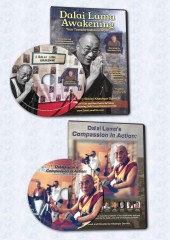
DVD cover for "Dalai Lama Renaissance" (narrated by Harrison Ford)
LOS ANGELES- The PAL DVD version of “Dalai Lama Renaissance” will be available to ship outside of the United States and Canada on June 15.
“Dalai Lama Renaissance” (narrated by actor Harrison Ford),
The PAL version of “Dalai Lama Renaissance” will contain the 82 minute feature documentary film, as well as 105 minutes of additional Special Features.
Directed by Khashyar Darvich, “Dalai Lama Renaissance” prominently features Nobel Prize-winning Tibetan Buddhist leader Tenzin Gyatso, the 14th Dalai Lama; quantum physicists Fred Alan Wolf and Amit Goswami (from the film What The Bleep Do We Know?), Dr. Michael Beckwith (from the blockbuster film The Secret) and radio host and political commentator Thom Hartmann (“Air America” radio’s Thom Hartmann Program), renowned social scientist Jean Houston, and others.
Dalai Lama Renaissance is the winner of 12 awards, and the official selection of over 40 international film festivals. The film has screened for sold out audiences around the world, including in theaters in over 100 cities in the United States, as well as in cinemas in Germany, Austria, Switzerland, Taiwan, and other countries. Awards include: Best Documentary Film (Monaco Intl. Film Festival), Grand Jury Prize (Canada International Film Festival), and Audience Award (Sedona International Film Festival), and others.
The film tells the story of 40 Western innovative thinkers who travel to India to meet with the Dalai Lama to solve the world’s problems. What happened was surprising and unexpected, and led to profound transformation.
Dalai Lama Renaissance is produced by Khashyar Darvich and the Wakan Films.
The film’s DVD release offers bonus features including deleted scenes, cast commentaries, featurettes, and a Q & A with Producer/Director Khashyar Darvich. This Wakan Films release will be available on DVD for $24.95 SRP.
For more information, please visit the film’s website, here: www.DalaiLamaFilm.com
<!– /* Font Definitions */ @font-face {font-family:Helvetica; panose-1:2 11 6 4 2 2 2 2 2 4; mso-font-charset:0; mso-generic-font-family:swiss; mso-font-pitch:variable; mso-font-signature:-536855809 -1073711037 9 0 511 0;} @font-face {font-family:Times; panose-1:2 2 6 3 5 4 5 2 3 4; mso-font-charset:0; mso-generic-font-family:roman; mso-font-pitch:variable; mso-font-signature:-536855825 -1073711039 9 0 511 0;} /* Style Definitions */ p.MsoNormal, li.MsoNormal, div.MsoNormal {mso-style-parent:”"; margin:0in; margin-bottom:.0001pt; mso-pagination:widow-orphan; font-size:12.0pt; mso-bidi-font-size:10.0pt; font-family:Times; mso-fareast-font-family:Times; mso-bidi-font-family:”Times New Roman”;} @page Section1 {size:8.5in 11.0in; margin:1.0in 1.25in 1.0in 1.25in; mso-header-margin:.5in; mso-footer-margin:.5in; mso-paper-source:0;} div.Section1 {page:Section1;} –>

“Dalai Lama Renaissance” (narrated by Harrison Ford) and Producer-Director Khashyar Darvich, come to Buffalo, New York on March 10
Khashyar | March 3, 2009
BUFFALO,NY- The “Dalai Lama Renaissance” Documentary Film, and it’s Producer-Director Khashyar Darvich, will both make their Buffalo and Western New York premiere on March 10, 2009, at Market Arcade Films & Arts, for two screenings and Q&A’s at 5:30 p.m. and 7:30 p.m.
This will be the first time that “Dalai Lama Renaissance” will screen in Buffalo and Western New York.
The Western New York screenings follow the very well attended screenings in New York City at the Rubin Museum of Art on February 21, 22, 28 and March 1. The last screening at the Rubin Museum of Art was sold out.
“Dalai Lama Renaissance” has won 12 awards, and has screened in over 80 cities in the United States, as well as in theaters around the world.
‘Dalai Lama Renaissance’ tells the story of 40 Western innovative thinkers who travel to India to meet with the Dalai Lama to solve the problem of world peace. What happened was surprising and unexpected, and was captured by a five-camera, 18-person crew.
The film features two of the starring quantum physicists from the hit theatrical documentary ‘What the Bleep Do We Know,’ Fred Alan Wolf and Amit Goswami. Also appearing in ‘Dalai Lama Renaissance’ are Michael Beckwith (who appears in ‘The Secret’ with Wolf), Air America radio host Thom Hartmann, and other prominent figures.
This is the first film about the Dalai Lama and Tibet to open theatrically in the United States since the international spotlight placed on China for its firm handling of Tibetan protesters speaking out against Chinese policies in Tibet.
“I narrated ‘Dalai Lama Renaissance,’” says Harrison Ford, “because I believe His Holiness is making a positive influence in our world. For me, the film represented an opportunity to continue assisting the optimistic efforts of an extraordinary individual.”
John Griffin of the Montreal Gazette calls ‘Dalai Lama Renaissance’ “a provocative, even enlightening film… fascinating, ravishingly beautiful and sonically soothing.” Film Threat Magazine’s Rick Kisonak said ‘Dalai Lama Renaissance’ is a “comedy sensation,” adding, “I can’t remember the last time a movie made me laugh so hard.”
‘Dalai Lama Renaissance’ is among the top-grossing theatrical documentaries of 2008-2009. This important film on human rights and world peace has screened in more than 80 cities around the U.S. and is the official selection of 40 film festivals around the world where it earned 12 awards. The film has attracted record audiences at film festivals and theaters around the U.S. and around the world. The film’s official webite is www.DalaiLamaFilm.com.
Location: ARTSPACE Buffalo is located at 1219 Main St, Buffalo, NY 14209
Phone: 716-803-6205

Renown Tibetan musician “Techung” makes Cleveland, Ohio premiere on March 7 and 8 at the Cleveland Cinemateque after “Dalai Lama Renaissance” screenings
Khashyar | March 3, 2009
CLEVELAND,OHIO- Renown Tibetan musician Techung, who wrote and recorded all of the Tibet music for ”Dalai Lama Renaissance”, and who recently peformed at Carnegie Hall with Phillip Glass, will be joining “Dalai Lama Renaissance” Producer-Director Khashyar Darvich for Q&A’s at the Cleveland Cinemateque in Cleveland, Ohio.
Techung will join Khashyar at the Saturday 7:30 p.m. and Sunday 4 p.m. screenings of the film at the Cleveland Cinemateque.
Techung is one of the most respected Tibetan musicians in the world, with his music used in other films.
His biography is below:
Tashi Dhondup Sharzur (Contributing Music)
Techung is a prominent Tibetan singer/songwriter living in exile in the San Francisco Bay Area. He is best known for his performances of traditional Tibetan music, dance, and opera under the name Tashi Dhondup Sharzur. He uses his childhood nickname, Techung, when performing as a solo artist. Whether performing in traditional or contemporary styles, Techung’s dual goals are to revive Tibetan music in the Tibetan community and to expose the rich performing cultural tradition of his homeland to the world community. In addition to being looked up to as one of the key keepers of traditional Tibetan musical traditions, Techung is also respected for the original solo and collaborative music he creates by drawing on both his own heritage and his familiarity with other world music traditions. Techung’s voice and music have been featured on the soundtracks of the IMAX film “Everest,” the feature film “Windhorse,” the documentary films “Stranger in My Native Land,” “Tibet’s Stolen Child,” and “Three Days for Tibet” (about a concert in Dharamsala with Joan Osborne, Zakir Hussein and other musicians). His music was also featured on PSA’s for the Milarepa Fund (promoting the 1999 Tibetan Freedom Concert), Students’ For a Free Tibet’s DVD demo “Tibet Will Be Free”, and Amnesty International (soliciting support for the human rights case of Ven. Palden Gyatso), as well as on an audio book by Diki Tsering titled “Dalai Lama, My Son.” His music is currently being used in the documentary film “What Remains of Us” which was selected at 2004 CANNES film festival. His music will be used in the upcoming Tibetan feature film “Dreaming of Lhasa” (working title: Poison Charm) directed by Tenzing Sonam and Ritu Sarin.

Tibetan musician "Techung" performing at Carnegie Hall with composer Phillip Glass. Techung wrote and performed most of the Tibetan music in the documentary film "Dalai Lama Renaissance" . Photo taken by Sonam Zoksang

Hollywood Filmmaker from Ohio appears March 7 and 8 at Cleveland Cinemateque - Screening of ‘Dalai Lama Renaissance’ Includes Filmmaker Khashyar Darvich, Tibetan Musician Techung and Author Dr. Thomas A. Forsthoefel
Khashyar | March 2, 2009
HOLLYWOOD FILMMAKER FROM OHIO
APPEARS MARCH 7 AND 8 AT CINEMATHEQUE
Screening of ‘Dalai Lama Renaissance’ Includes Filmmaker Khashyar Darvich,
Tibetan Musician Techung and Author Dr. Thomas A. Forsthoefel
WHO:
Khashyar Darvich — Hollywood filmmaker, Ohio native, Baldwin-Wallace College alumnus
Techung — Renowned Tibetan musician, songwriter and recording artist
Dr. Tom Forsthoefel — Author of ‘The Dalai Lama: Essential Writings’ and Chair, Religious Studies Department, Mercyhurst College
WHAT:
Screening of ‘Dalai Lama Renaissance,’ narrated by Harrison Ford; Q&A with Khashyar Darvich and Dr. Tom Forsthoefel; and musical performance by Techung.
WHEN:
7:30 p.m., Sat., March 7, 2009; 4 p.m., Sun., March 8, 2009
WHERE:
The Cleveland Institute of Art Cinematheque, 11141 East Blvd., Cleveland, Ohio 44106-1710
EVENT DETAILS:
‘Dalai Lama Renaissance’ the award-winning 81-minute documentary feature narrated by Harrison Ford, screens at 7:30 p.m. on Saturday, March 7, 2009, at the Cleveland Institute of Art Cinematheque, 11141 East Blvd. The film’s screening earlier this year at the Cleveland Museum of Art drew the largest audience of any film in the museum’s 25-year history of showing films.
‘Dalai Lama Renaissance’ is produced and directed by Oxford, Ohio, native and Baldwin-Wallace College alumnus Khashyar Darvich. A Q&A session with Darvich will follow the screening. See his bio online at http://www.dalailamafilm.com/Khashyar-Darvich-Biography.html.
Following the Q&A, Tibetan musician, composer and recording artist Techung will perform on the Tibetan lute and flute. Techung wrote and recorded the soundtrack music for ‘Dalai Lama Renaissance.’ He recently performed at Carnegie Hall with jazz musician Phillip Glass. Techung is best known for his performances of traditional Tibetan music, dance, and opera under the name Tashi Dhondup Sharzur. Techung’s credits include vocal and musical performances on the soundtracks of ‘Everest,’ ‘Windhorse’ and the upcoming Tibetan feature film ‘Dreaming of Lhasa.’ His work is also featured in the audio book ‘Dalai Lama, My Son’ by Diki Tsering.
Joining Darvich in the Q&A will be Dr. Thomas A. Forsthoefel, Chair of the Religious Studies Department at Mercyhurst College in Erie, Pa. Forsthoefel is the author of ‘The Dalai Lama: Essential Writings,’ a compilation of teachings on wisdom, compassion, and meditation by the 14th Dalai Lama.
VENUE DETAILS:
Date: March 7, 2009 and March 8, 2009
Times: 7:30 p.m., Saturday, March 7; 4 p.m., Sunday, March 8
Theater Name: Cleveland Institute of Art Cinematheque
Theater Address: 11141 East Blvd., Cleveland
Theater Web Site: www.cia.edu/cinematheque
Theater Phone: 216-421-7450 or 800-223-4700
ABOUT ‘DALAI LAMA RENAISSANCE’
‘Dalai Lama Renaissance’ is among the top-grossing documentaries of 2008. This important film on human rights and world peace has played to sold-out audiences at film festivals around the world. “Dalai Lama Renaissance” has earned 12 film festival awards, and is the official selection of 40 film festivals around the world.
The film tells the story of 40 Western innovative thinkers who travel to India to meet with the Dalai Lama to solve the problem of world peace. What happened was surprising and unexpected, and was captured by a five-camera, 18-person crew.
The film features two of the starring quantum physicists from the hit theatrical documentary ‘What the Bleep Do We Know,’ Physicists Fred Alan Wolf and Amit Goswami. Also appearing in ‘Dalai Lama Renaissance’ are Michael Beckwith (who appears in the film ‘The Secret’ with Wolf), Air America radio host Thom Hartmann, and others.
The film’s official website is www.DalaiLamaFilm.com.
###