Dalai Lama’s U.S. Visits Bring ‘Renaissance’

| March 22, 2010

DALAI LAMA’S U.S. VISITS BRING ‘RENAISSANCE’

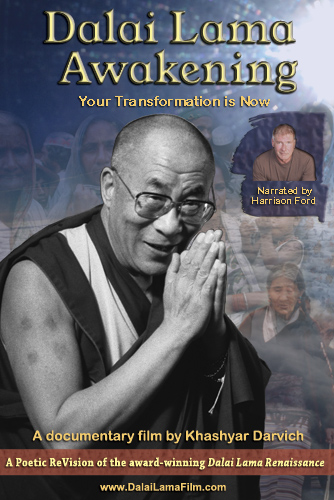
Those planning the Tibetan spiritual leader’s visits in Florida, California and Iowa also screen the documentary ‘Dalai Lama Renaissance’ (narrated by Harrison Ford – www.DalaiLamaFilm.com) to lay the spiritual groundwork for audiences’ transformation.

March 22, 2010

HOLLYWOOD, CALIF. – Over the last six months, three U.S. visits by Tenzin Gyatso, the spiritual leader and 14th Dalai Lama of Tibetan Buddhism, all have something in common: Their organizers have chosen to screen the award-winning documentary Dalai Lama Renaissance (narrated by Harrison Ford) prior to his arrival.

Before coming to California and Florida earlier this year, organizers of the Dalai Lama’s visits researched films about the spiritual leader. They did so to find a means of telling their communities who the Dalai Lama is and why his message is relevant to their world.

They discovered ‘Dalai Lama Renaissance,’ a documentary film that won 12 international awards and that screened in hundreds of cinemas in the United States and around the world. When ‘Dalai Lama Renaissance’ screened in cinemas in Taiwan in 2009, the Chinese government took notice and aim at the film in its People’s Daily newspaper. In an attempt to help prison inmates resolve inner and outer conflicts through dialog and compassion, the film’s director, Khashyar Darvich, also screened and toured with the film in prisons.

“What we found was a film that was captivating,” said Maria Santamarina, Diversity Officer at Florida Atlantic University in Boca Ratón. “It gave us a personal glimpse of the Dalai Lama and his perspective on the transformation needed in the world right now.” The film screened Feb. 17 and 23, 2010, in anticipation of the Feb. 24 visit by the Dalai Lama.

Santamarina said a colleague referred her to the film, which she found online at DalaiLamaFilm.com. On the other hand, Pema Choden, president of the Tibetan Association of Southern California, first became familiar with Dalai Lama Renaissance when she met the film’s producer/director Khashyar Darvich at a celebration of the Dalai Lama’s 74th birthday.

“I saw the film shortly after meeting Khashyar,” said Choden, “and I felt that it was appropriate to screen during His Holiness’ teachings in Long Beach last September. The film captured the Dalai Lama’s ability to humble people in such a way that no matter who they are, their egos fly out the window.”

Erin Wheat, Program Coordinator for Campus Activities at the University of Northern Iowa, discovered the film online while doing research. She found it in time to plan a screening prior to the Dalai Lama’s May 18, 2010, visit to Cedar Falls.

“We chose to screen Dalai Lama Renaissance because of its content related to His Holiness’ visit in May,” Wheat said. “With so many concerns that people have in our country and in the world – the economy, wars, natural disasters – we felt that his message of peace would set the right tone for his visit,” she said. “We also felt it would be great to have a question and answer session with the producer/director Khashyar Darvich to expand on that message and to share details of how the film was made.”

Santamarina said the Florida screening featured a Q & A with Darvich, who related not only his experiences of shooting the film in remote Dharmsala, India, and editing more than 140 hours of footage, but also told about his personal transformation that took place in the process. She said Darvich spoke of how he meditated and prayed for guidance in editing the film.

“The audience was obviously moved and soulful,” Santamarina said. “There was active participation by the audience members who were extremely engaged, curious and responsive.” Pema Choden had a similar experience with the California screening.

“The response from the audience was extremely gracious,” she said. “Many who attended were so inspired by the film that they wanted to take home a copy on DVD to see it again or to share with loved ones.”

Erin Wheat said she believes that screening Dalai Lama Renaissance and engaging the community in a discussion about the film through a Q & A with Darvich will provide a needed transition for the community toward assurance that spiritual answers and self-reflection can solve many problems.

“This transition will set the stage for the Dalai Lama to present his message of peace and offer his wisdom based on more than 60 years of spiritual leadership,” she said.

Choden added that the film captures the Dalai Lama’s ability to inspire people to be the best human beings that they can be.

“The theme of the film and the teachings of the Dalai Lama are extremely relevant today because both focus on the essence of compassion and altruism,” she said. Maria Santamarina agrees.

“Screening Dalai Lama Renaissance for our community provided a beautiful segue to the Dalai Lama’s visit because the film deals with the transformation of 40 intellectuals who visit with him to discuss changes that need to be made in our world,” she said.  “Nothing else could be more relevant and transforming today.”

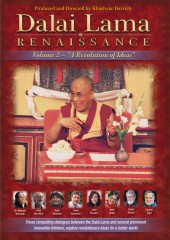
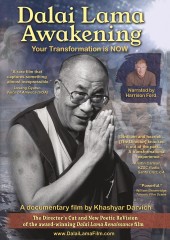
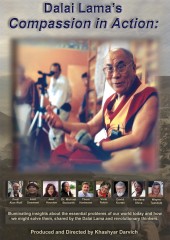
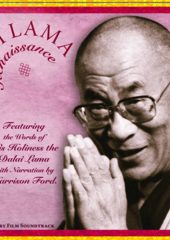
Dalai Lama Renaissance, narrated by Harrison Ford, was produced by Khashyar Darvich and Wakan Films. To view trailers, schedule a screening or to purchase the film on DVD, visit www.DalaiLamaFilm.com.

Dalai Lama Renaissance Film Screens in Prisons – Director Speaks with Inmates after Screenings

| November 13, 2009

Inmates at the Ramsey maximum security prison in Texas watch the film, 'Dalai Lama Renaissance' (narrated by Harrison Ford). Half of the inmates in the audience were convicted of murder.

Inmates at the Ramsey maximum security prison in Texas watch the film, 'Dalai Lama Renaissance' (narrated by Harrison Ford). Half of the inmates in the audience were convicted of murder.

HOUSTON, Texas – When documentary film Producer-Director Khashyar Darvich was invited to screen his award-winning film about the Dalai Lama, ‘Dalai Lama Renaissance’ (narrated by Harrison Ford – www.DalaiLamaFilm.com), for inmates in maximum security prisons near Houston, Texas, he immediately said ‘yes.’

He offered to purchase his own an airline ticket, attend the screenings, and then speak with the inmates afterwards.

“I had never been to a prison before,” said Director Darvich. “But, I had a deep feeling that the experience would be meaningful and powerful, for the inmates, but also for me.”

“When I sense that my heart responds to something, and I feel warmth in my chest, then I take this as a clear sign that it is the right thing for me to pursue that course of action. The fundamental intention of making this film was to impact and transform audiences in a positive way,” Darvich says,  “and I thought of no better place to screen ‘Dalai Lama Renaissance’ than a prison.”

Half of the inmates who attended the screenings in the two Texas prisons, were convicted of murder, some of them for double murder. There were some in the audience who were convicted of fraud.

However, Darvich was very surprised at how insightful and intelligent the inmates comments were about the film, and how the inmates applied the themes and insights in the film to themselves in a very personal and direct way.

'Dalai Lama Renaissance' Producer-Director Khashyar Darvich speaks with inmates after the screening of his film about the Dalai Lama to inmates.

'Dalai Lama Renaissance' Producer-Director Khashyar Darvich speaks with inmates from the Stiles maximum security prison near Houston, Texas after the screening of his film about the Dalai Lama to inmates.

“One of the main themes of the film,” says Darvich, “is resolving both inner and outer conflicts, and understanding that the best way to resolve conflicts in the world and in your community is to first resolve issues within yourself. I was very surprised at how the inmates understood this right away, and applied the message of the film immediately and effortlessly to themselves.”

One of the inmates in the Stiles maximum security prison in Texas, was emotional and expressed, as he pointed his fingers to his chest, that the issue of Tibet and China mentioned in the film and the realization that we all have our own “Inner Tibets,” really impacted him.

“One of the realizations that was crystal clear to me while I was at the prisons,” Darvich says, “was that some of the inmates would never be able to get out, and were to spend every day of their lives in prison. For most people, this would be a depressing and unfathomable thought. Before I visited the prisons, just imagining the thought of being incarcerated created fear and panic within me.”

Many of the inmates who attended the screenings have life sentences, and had a lot of time to think and reflect.

And yet, Darvich says, a person who is not physically in prison, can appear to have all of the freedom in the world, and yet be imprisoned by their thoughts, habits and the jail that they create within their own mind.

“Inmates who lose their freedom through their mistakes and actions,” Darvich says, “can choose to see their time in prison as an opportunity, and a place for spiritual learning and person growth.”

Darvich was speaking with the person who invited him to screen the film in the prisons, Terry Conrad, the Director of ‘Project Clear Light’ (www.projectclearlight.org), about how the life of an inmate is somewhat like a monk who lives in a monastery.

Except in the case of inmates, their world is often surrounded by violence, which is an added incentive to work on finding inner peace.

After the screenings and Q&A sessions, Darvich said that many of the inmates mentioned that they do not experience many positive life-affirming experiences in prison, and they felt inspired and impacted by the screening, and listening to the Dalai Lama’s words about compassion and personal responsibility.

“But,” Darvich says, “it felt good to my heart and one of the most meaningful things I have done with the film to show inmates that someone cares and wants to show compassion…”

Darvich says that he would like to screen the film in other prisons, and have further open dialogues with inmates.

Khashyar Darvich is the Producer-Director of both the ‘Dalai Lama Renaissance’ documentary film (narrated by Harrison Ford), as well as the newly released ‘Dalai Lama Renaissance Vol. 2: A Revolution of Ideas,’ both of which are available on DVD here: www.DalaiLamaFilm.com