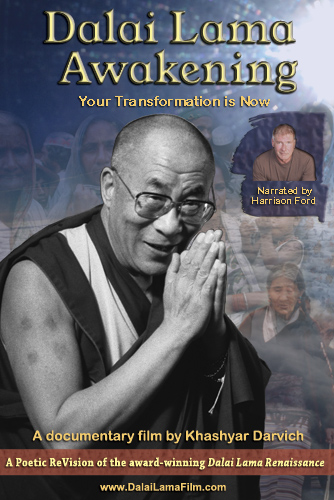
Harrison Ford Documentary, Dalai Lama Renaissance, Attacked by China’s Communist Party

Khashyar | July 28, 2009

China's Communist Party has attacked the "Dalai Lama Renaissance" Documentary Film

China's Communist Party has attacked the "Dalai Lama Renaissance" Documentary Film


Chinese government reacts to successful theatrical premiere of Dalai Lama film and positive press in Taiwan

Los Angeles, CA (July 29, 2009) - The Chinese government often has the clout and muscle to prevent Hollywood films from being released in Asia, and can even discourage films from having an extended release in the West if they are perceived to threaten Chinese policy.

Films starring such big name stars as Richard Gere and Sharon Stone were boycotted by China after the actors expressed support for the Tibet Independence Movement. After Disney released Kundun, Martin Scorsese’s 1997 feature film about the Dalai Lama, the studio incurred the wrath of the Chinese government, and Disney films were banned for an indefinite period of time.

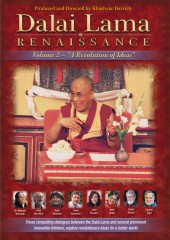
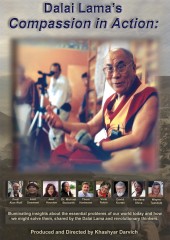
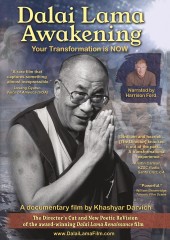
Recently, after a theatrical documentary film about the Dalai Lama and narrated by Harrison Ford entitled Dalai Lama Renaissance (www.DalaiLamaFilm.com) was released in theaters in Taiwan this summer and received front page positive press in the Chinese language Taiwanese newspapers, the Chinese government took keen notice.

The People’s Daily, a daily newspaper and media arm of the Central Committee of the Communist Party of China, quickly and sharply criticized Dalai Lama Renaissance in an article in its online edition.

The article, posted July 14th in the People’s Daily Online entitled “Western Movies Build Grand and Perfect Image of Dalai Lama,” argues that “in recent years, a wave of ‘Dalai Lama fever’ has appeared in the Western movie industry… describing the Chinese government’s peaceful liberation of Tibet as ‘cruel oppression,’ and depicting the Dalai Lama’s life in India as difficult… Some movies even advocate the Dalai Lama’s concept of [Tibetan] ‘independence.’”

Although the title of the article refers to “Movies,” the article exclusively focuses on Dalai Lama Renaissance. Referring to the film, which has been distributed in cinemas around the world, the article criticizes that “the part of the movie related to the peaceful liberation of Tibet was filled with political bias, reflecting the director’s ignorance and misunderstanding of Tibet’s history… The movie transforms the Dalai Lama into an omniscient sage, reflecting a ‘misunderstanding’ of the Dalai Lama’s image in the West… In fact, what these movies depict is just the ‘anesthesia’ given by the Dalai Lama to the West.”

The fact that the Chinese Communist Party’s main media organization has chosen to criticize the film may be a defensive reaction to the very positive press that Dalai Lama Renaissance received in the Chinese language media in Taiwan, where it premiered in front of sold-out audiences on June 1. And it may be an attempt to counteract any effect on readers in mainland China, who often have access to Chinese language news from Taiwan.

Taiwan’s best-selling weekly newspaper, E Weekly, gave the film a rating of 82, which is one of the highest ratings that a film has received in the past year in Taiwan. According to its Taiwanese theatrical distributor, Blockbuster of Taiwan (no relation to Blockbuster video in the United States), E Weekly regularly gives films far lower ratings. FTV, a television station in Taiwan, also reported that that the premiere of the film in Taiwan was very successful, with not an empty seat in the cinema, and that “many people were touched after watching the film.” The Taipei Times wrote that “the film rapidly grabs hold of you… an insightful documentary.”

Ironically, the Chinese Communist Party may feel most threatened by the idea brought up in the film regarding economic sanctions against China from the West. But despite this being a near unanimous suggestion by the Westerners in a scene in Dalai Lama Renaissance, the Dalai Lama discouraged the proposal.

The Taiwanese newspaper The Liberty Times points out that, in the film, “the Dalai Lama thinks that humanity is the most important thing in the world and economic sanctions might affect many Chinese citizens, thus he is hesitant whether such an approach is right.”

The People’s Daily also tries to discredit the producer-director of the film, Khashyar Darvich. In its article, the newspaper claims that the director is a “follower” of the Dalai Lama, and supports this assertion by referring to an interview where Darvich mentioned that he produced the film party for the opportunity to spend time with the exiled Tibetan leader.

“It’s interesting that the Chinese Communist Party refers to me as a follower of the Dalai Lama,” Darvich responded. “Although I respect the Dalai Lama as a man of peace, just as the Nobel Peace Prize Committee did by awarding him the Nobel Peace prize, and as do most governments around the world, I am not a Dalai Lama groupie. When I began the film, I was not very familiar with the Dalai Lama’s ideas. I think that his actions, and the respect that he garners around the world, speaks for itself.”

Despite the Chinese Communist Party’s attempt to discredit the film, Producer-Director Khashyar Darvich states that his production company, Wakan Films, has just signed an agreement to release Dalai Lama Renaissance unofficially into China itself, under the radar of the Chinese Government.

“My hope,” says Darvich, “is that the film will open a dialog between the Chinese government and the Dalai Lama, and that the average Chinese citizen will be able to see that the Dalai Lama is not such a bad guy and is interested in a solution to the Tibet issue that serves the highest good and benefits both the Chinese and Tibetans. I would be happy to attend a screening of the film in China and conduct a Q&A with Chinese audiences as a way to contribute to positive dialog.”

For more information on Dalai Lama Renaissance, go to www.DalaiLamaFilm.com.

Senator Barack Obama Encourages President to Urge Tibet Resolution - March 28, 2008

Khashyar | January 1, 2009

Obama Encourages President to Urge Tibet Resolution

Friday, March 28, 2008

FOR IMMEDIATE RELEASE
CONTACT: Michael Ortiz, 202 228 5566

WASHINGTON, D.C. - U.S. Senator Barack Obama (D-IL) today sent the following letter to President Bush, calling on him to employ every diplomatic tool to persuade Chinese President Hu Jintao to make significant progress in resolving the Tibet issue. Given the recent events in Tibet and the upcoming Beijing Olympics, Obama asks President Bush to encourage the Chinese government to negotiate with the Dalai Lama, guarantee religious freedoms for the Tibetan people, protect Tibetan culture and language, and support the exercise of genuine autonomy for Tibet. Obama also supports Bush’s insistence that foreign press and diplomatic personnel have free access to Lhasa and other Tibetan cities and villages to ensure that repression and human rights violations cannot escape the world’s notice.


The text of the letter is below:

Dear Mr. President:

The situation in Tibet is deeply disturbing, and requires that all of us, regardless of party, do what we can to try to influence it for the better. I understand that you discussed the subject on Wednesday with President Hu Jintao. The United States has many issues for which China’s cooperation is important, including denuclearization of North Korea, ending Iran’s nuclear program, stopping the genocide in Darfur, confronting repression in Burma, and combating global warming. However, it is important that we give high priority to the plight of Tibetans and make clear to President Hu that the way in which China treats all Chinese citizens, including Tibetans, profoundly affects how China is viewed in the United States and throughout the international community.

Resolution of differences between the Chinese Government and the Dalai Lama is the key to progress in Tibet. The Dalai Lama, as you have said, is “a good man.” He is revered by virtually all Tibetans, and his absence from his homeland creates an incurable wound in the heart of Tibetan Buddhism. Tibet’s unique cultural and religious heritage cannot be preserved if he is demonized and kept at arm’s length. He has accepted Beijing’s precondition for a solution, namely recognition that Tibet is part of China, and has clearly stated that he is seeking religious, cultural and linguistic protection and autonomy for the Tibetan people, not independence. More recently, he indicated his belief that despite recent events, the Chinese people deserve to host the Olympics this summer.

I hope you made clear to President Hu the American view about the importance of the following: a negotiation with the Dalai Lama about his return to Tibet; guarantees of religious freedom for the Tibetan people; protection of Tibetan culture and language; and the exercise of genuine autonomy for Tibet. That is the path to the stability and harmony that the Chinese leaders say they are seeking in Tibet.

In addition to your personal intervention with President Hu, there are other steps I hope you will take to highlight our concern. I support your call for the foreign press and diplomatic personnel to have free access to Lhasa and other Tibetan cities and villages to ensure that repression and human rights violations cannot escape the world’s notice. Beijing has committed to the International Olympic Committee to allow foreign journalists free access to cover stories throughout China, including Tibet. We should hold them to that commitment. The U.S. and our democratic allies and friends should also urge the UN Human Rights Council to send an investigatory team to Tibet. China should be encouraged to allow the International Committee for the Red Cross to visit prisons in Tibet to ensure that detainees are not held under inhumane conditions, tortured, or mistreated.

Like you, I want to take steps that increase the chance of a negotiated solution between Beijing and the Dalai Lama, and that have the best chance of improving the lives of ordinary Tibetans. Therefore, I support your effort to aggressively use your relationship with President Hu to achieve these goals. Should it appear, however, that the Chinese are taking private diplomacy as a license for inaction or continued repression, I would urge you to speak out forcefully and publicly to disabuse them of the notion that they can thus escape international censure.

Despite the high emotions of the present time, I hope you can persuade the Chinese leadership that in this the year of the Beijing Olympics they have a unique opportunity to make dramatic progress in resolving the Tibet issue. Chinese leaders have it within their power to achieve that worthy goal if they take steps to change the situation in Tibet for the better and by reaching an accommodation with the Dalai Lama. Progress in Tibet would profoundly affect the world’s perception of China as it prepares to host the Olympic Games in August.

Sincerely,


Barack Obama

United States Senator

Barack Obama Statement Honoring the Awarding of the Congressional Gold Medal to the Dalai Lama - October 17, 2007

Khashyar | December 28, 2008

Barack Obama Statement Honoring the Awarding of the Congressional Gold Medal to the Dalai Lama


Washington, D.C., October 17, 2007 – “His Holiness the Dalai Lama, Tibet’s exiled leader, stands among the great moral figures of our time. His mission is reflected by personal example – a life led in humility, moral courage and the belief in the redemptive power of human compassion.

Today we celebrate the Dalai Lama, not only as the spiritual rock for the Tibetan people, but also for his tireless advocacy for religious harmony, non-violence and human rights throughout the world.

I am proud and honored to join my colleagues and all Americans in paying tribute to the Dalai Lama. By bestowing on him the Congressional Gold Medal, we send a clear message of our commitment and support for his efforts to find a peaceful solution to the Tibet issue through dialogue with the Chinese leadership.

The people of Tibet have a distinct and rich culture, and the Dalai Lama occupies a special place in their Buddhist beliefs and practices. The Dalai Lama has been consistent in his message that he does not seek independence for Tibet, that he supports the integrity and unity of the People’s Republic of China, and that he aims for a solution based on Tibetan autonomy within China.

I am pleased that China has been willing to enter into discussions about Tibet’s future, including inviting the representatives of the Dalai Lama to China for a sixth round of talks earlier this summer.

But it is now time for the Chinese leadership to engage in a dialogue with the Dalai Lama directly, allow him to return to Tibet, and work with him to assure the identity and cultural integrity of Tibet and to address the legitimate needs of the Tibetan people.

Taking such steps will build the basis for long-term stability in this strategic part of that country.”