Recent news about Techung - the Tibetan musician featured on the Dalai Lama Renaissance sountrack
Khashyar | July 18, 2009
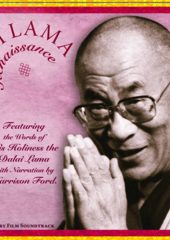
Techung, the Tibetan artist who is the featured musician on the “Dalai Lama Renaissance” soundtrack, has been making much news lately, including embarking on an international tour.
He also has launched his new website: www.techung.com
Here are some recent quotes about Techung from some notable people and in the press:
*******
I had the pleasure of working with Techung, the young Tibetan singer at a recent concert at Carnegie Hall(February 3,2009). He is a highly gifted singer, bursting with talent and personality. I think he is an unusually attractive performer and clearly has the potential to appeal to an audience far beyond the ethnic Tibetan community who already know him quite well. A young man of such talent representing the culture, as it were, of this exiled and oppressed community, could very well have the effect of bringing greater attention to the problems faced by Tibetans living inside and outside of Tibet.
I wish him and those who support him the very best success.
- Philip Glass, March 27, 2009
“Techung” (aka Tashi D. Sharzur) is an exceptional Tibetan musical talent: rigorously trained as an opera “star” by the grand masters of Lhamo, the traditional opera, at the Tibetan Institute of Performing Arts, and with the a life-long background in Tibetan folk music. In recent years, he has written and performed dozens of new songs. While each song appears unmistakably Tibetan and traditional, they are in reality modern compositions with contemporary lyrics, often his own. “Yarlung-Tibetan Songs of Love and Freedom” is an outstanding example of new Tibetan music that will reach a global audience.
- Tenzin N. Tethong
former representative of His Holiness the Dalai Lama and “Kalon Tripa” of the Tibetan Government in Exile.
December 17, 2008
“Tibet musician plays in Taiwan on world tour
FAR FROM HOME: Though he was born outside Tibet, musician Techung has dedicated his life to raising awareness of Tibet’s culture and its political plight …”
May 25, 2008
The Phillippine Star, World Music Under the Stars
“His eyes are as hauntingly serene as his voice, singing of a homeland he has never seen. His call for courage - Nying Thop - cuts through the balmy night air and floats off, carrying the message to his countrymen scattered all over the world: “Never lose courage.”
Techung, a prominent Tibetan singer-songwriter, was one of the most anticipated acts in the recently concluded 2nd Penang World Music Festival, which …”
For complete press information visit: www.sonicbids.com/techung
Videos
http://www.youtube.com/watch?v=HPTgd29adnk
http://www.youtube.com/user/LimitlessSkyRecords
http://http://www.youtube.com/watch?v=hcgeqt2Y9IA

Renown Tibetan musician “Techung” makes Cleveland, Ohio premiere on March 7 and 8 at the Cleveland Cinemateque after “Dalai Lama Renaissance” screenings
Khashyar | March 3, 2009
CLEVELAND,OHIO- Renown Tibetan musician Techung, who wrote and recorded all of the Tibet music for ”Dalai Lama Renaissance”, and who recently peformed at Carnegie Hall with Phillip Glass, will be joining “Dalai Lama Renaissance” Producer-Director Khashyar Darvich for Q&A’s at the Cleveland Cinemateque in Cleveland, Ohio.
Techung will join Khashyar at the Saturday 7:30 p.m. and Sunday 4 p.m. screenings of the film at the Cleveland Cinemateque.
Techung is one of the most respected Tibetan musicians in the world, with his music used in other films.
His biography is below:
Tashi Dhondup Sharzur (Contributing Music)
Techung is a prominent Tibetan singer/songwriter living in exile in the San Francisco Bay Area. He is best known for his performances of traditional Tibetan music, dance, and opera under the name Tashi Dhondup Sharzur. He uses his childhood nickname, Techung, when performing as a solo artist. Whether performing in traditional or contemporary styles, Techung’s dual goals are to revive Tibetan music in the Tibetan community and to expose the rich performing cultural tradition of his homeland to the world community. In addition to being looked up to as one of the key keepers of traditional Tibetan musical traditions, Techung is also respected for the original solo and collaborative music he creates by drawing on both his own heritage and his familiarity with other world music traditions. Techung’s voice and music have been featured on the soundtracks of the IMAX film “Everest,” the feature film “Windhorse,” the documentary films “Stranger in My Native Land,” “Tibet’s Stolen Child,” and “Three Days for Tibet” (about a concert in Dharamsala with Joan Osborne, Zakir Hussein and other musicians). His music was also featured on PSA’s for the Milarepa Fund (promoting the 1999 Tibetan Freedom Concert), Students’ For a Free Tibet’s DVD demo “Tibet Will Be Free”, and Amnesty International (soliciting support for the human rights case of Ven. Palden Gyatso), as well as on an audio book by Diki Tsering titled “Dalai Lama, My Son.” His music is currently being used in the documentary film “What Remains of Us” which was selected at 2004 CANNES film festival. His music will be used in the upcoming Tibetan feature film “Dreaming of Lhasa” (working title: Poison Charm) directed by Tenzing Sonam and Ritu Sarin.

Tibetan musician "Techung" performing at Carnegie Hall with composer Phillip Glass. Techung wrote and performed most of the Tibetan music in the documentary film "Dalai Lama Renaissance" . Photo taken by Sonam Zoksang

San Francisco - Renown Tibetan musician Techung will join filmmaker Khashyar Darvich at the Sunday Feb 15 (4 p.m.) and Monday Feb 16 (7:15 p.m.) screenings of “Dalai Lama Renaissance” at the Red Vic Theater
Khashyar | February 14, 2009
SAN FRANCISCO- Renown Tibetan musician Techung, who wrote and recorded all of the Tibet music for ”Dalai Lama Renaissance”, and who recently peformed at Carnegie Hall with Phillip Glass, will be joining “Dalai Lama Renaissance” Producer-Director Khashyar Darvich for Q&A’s at the Red Vic Theater in San Francisco.
Techung will join Khashyar at the Sunday 4 p.m. and Monday 7: 15 p.m. screenings of the film at the Red Vic.
It is also possible that another very special guest may join Khashyar and Techung at the Monday 7:15 p.m. screening.
Techung is one of the most respected Tibetan musicians in the world, with his music used in other films.
His biography is below:
Tashi Dhondup Sharzur (Contributing Music)
Techung is a prominent Tibetan singer/songwriter living in exile in the San Francisco Bay Area. He is best known for his performances of traditional Tibetan music, dance, and opera under the name Tashi Dhondup Sharzur. He uses his childhood nickname, Techung, when performing as a solo artist. Whether performing in traditional or contemporary styles, Techung’s dual goals are to revive Tibetan music in the Tibetan community and to expose the rich performing cultural tradition of his homeland to the world community. In addition to being looked up to as one of the key keepers of traditional Tibetan musical traditions, Techung is also respected for the original solo and collaborative music he creates by drawing on both his own heritage and his familiarity with other world music traditions. Techung’s voice and music have been featured on the soundtracks of the IMAX film “Everest,” the feature film “Windhorse,” the documentary films “Stranger in My Native Land,” “Tibet’s Stolen Child,” and “Three Days for Tibet” (about a concert in Dharamsala with Joan Osborne, Zakir Hussein and other musicians). His music was also featured on PSA’s for the Milarepa Fund (promoting the 1999 Tibetan Freedom Concert), Students’ For a Free Tibet’s DVD demo “Tibet Will Be Free”, and Amnesty International (soliciting support for the human rights case of Ven. Palden Gyatso), as well as on an audio book by Diki Tsering titled “Dalai Lama, My Son.” His music is currently being used in the documentary film “What Remains of Us” which was selected at 2004 CANNES film festival. His music will be used in the upcoming Tibetan feature film “Dreaming of Lhasa” (working title: Poison Charm) directed by Tenzing Sonam and Ritu Sarin.